Stop Building “Mini-Silicon Valleys”: The Bold New Blueprint for the DMV’s Tech Revolution
Why are DMV founders settling for lower valuations while the region's wealthiest investors stay on the sidelines? Discover the "double whammy" of capital and talent that is currently stalling growth and the one "front door" solution that could change everything for the local startup ecosystem.
Since the digital revolution of the 1970s, major metropolitan areas in the U.S. have at one point or another made a concerted effort to grow their startup ecosystems. Today, there are a series of factors that create a truly competitive startup ecosystem. There’s a common trope that all regions should compare themselves to Silicon Valley, New York City, or Boston. Here’s the thing, those three markets have an extremely unique blend of talent, assets and reputational capital that simply cannot be eclipsed by the short- or medium-term efforts of a region.
Instead of trying to play the field, regions with competitive ecosystems build around their strongest industry clusters and existing assets. Over the past two decades, regions like Pittsburgh with mobility, Cincinnati with logistics, or the Washington, D.C. (DMV) region with dual-use technologies have emerged as leaders in their respective industries.
Building a successful ecosystem means being honest and upfront about a region’s competitive advantages and how they fit into a comprehensive startup attraction and retention strategy. Rome wasn’t built in a day, or without risk, and neither are successful ecosystems. Competitive ecosystems require commitment, time, money, and leadership to bear fruit. Their efforts acknowledge that there are factors largely outside of a local government’s control: macroeconomics, geopolitics, cost of living, and preexisting industries. Staying the course in targeted ecosystem building efforts through choppy waters is often how regions evolve or get left behind.
An Ecosystem on the Verge
The DMV has extraordinary potential to position itself as a national leader in the innovation economy. The region has many of the ingredients needed for success, including one of the strongest tech talent pools in North America, unparalleled access to decision makers, the world’s largest customer in the Pentagon, top-tier physical and digital infrastructure, and the seventh-largest U.S. metro by population. Together, these strengths create significant untapped opportunity for the region’s potential.
It is nearly impossible to discuss how the DMV can grow its startup ecosystem without addressing the elephant in the room, a legacy of government-heavy industry and a culture of risk aversion. These two factors play major roles in influencing the decisions of both existing and potential founders.
Founders and investors alike see the impact of these factors in ways often unbeknownst outside the region. The first is that government-first startups often struggle to command the same valuation multiples as commercial-first or even dual-use technologies, leading founders at the same stage to close rounds at significantly lower valuations than their commercial counterparts. Second is the presence of a large number of HNWIs and UHNWIs in the region. As the DMV diversifies away from legacy government industries and into commercial technology, this group is growing. However, the risk-averse legacy of the region makes them less likely to invest in high-risk asset classes such as venture capital or angel deals.
This creates an environment where startups must frequently travel out of market to raise capital or hire specific niche talent. As startups bring on investors and early employees from outside the region, some will ultimately relocate to be closer to those investors.
Tech talent is one of the DMV’s biggest strengths. However, in a strange twist of fate, the region is also one of North America’s largest net exporters of graduating university tech talent. This brain drain effect is a cause for real consternation in the DMV. Whether driven by cost of living, climate, or simply the desire for a new chapter, the region must do more to retain this pipeline of potential founders. This double whammy of talent and capital being simultaneously present, yet not, can often cause founders.
Whether you’re a HNWI or a graduating quantum-computing engineer, getting involved in the ecosystem can sometimes feel challenging. Not because the DMV ecosystem is exclusive or cliquey, it is quite the opposite, but because the ecosystem lacks a clear front door. There are often over a dozen meetups, demos, and pitch events every week, often hosted by disparate organizations and overlapping with one another, with no one-stop shop to get plugged in. If there were one suggestion to help grow the DMV’s tech ecosystem, it would be to establish a singular front door.
How Economic Development Creates Value for Founders
When it comes to economic development organizations (EDO) creating long-term value for founders, it can be helpful to borrow an acronym from fintech’s playbook: KYC - know your customer (or founders, in this case). For economic development organizations seeking to create value, that starts with getting boots on the ground and understanding their local startup ecosystem.
Every ecosystem, even top ecosystems, has gaps. A prudent economic development organization listens first and acts second. It’s important to bring the entire startup ecosystem into focus, talking not just with founders but also funders, ecosystem conveners, universities, technologists, corporates, and even service providers. Identifying gaps before acting helps intentionally allocate precious resources, money, time, and brand credibility, all of which local economic development organizations must carefully manage.
EDOs should seek to be facilitators. In the same way early-stage venture funds provide seed funding for startups, EDOs can seed initiatives but allow subject-matter experts to operationalize them.
Building a long-term relationship with startup founders, many of whom have likely never interacted with economic development before, can be a challenge. The best way to provide long-term value for a startup is to offer resources that for each stage of a company’s growth cycle, recognizing that there is only so much value an EDO’s resources can provide. Economic developers ought to map out their resources before launching startup engagement initiatives.
Being superconnectors to resources typically thought to be out of the reach of local government creates real, meaningful value for founders. When most people think of local government, services such as libraries, permits, tax collection, and workforce development typically come to mind. It can come as a pleasant surprise, and a way to build credibility with founders, when a local EDO has warm relationships with regional venture and private equity funds, federal and state agencies, and technologist communities.
Building the DMV’s Ecosystem
Building the DMV’s startup ecosystem is not without its challenges. A few pieces of critical infrastructure could go a long way toward accelerating the region’s startup activity. These include shared startup-only incubator with below-market rents, shared testing facilities (chip vibration labs, clean rooms, etc.), large outdoor proving grounds for testing and demonstration, and a digital testbed.
Facilities like these are where partnerships between private industry, funders, government agencies, and commercial real estate developers can become a powerful combination, as seen with the recently announced National Innovation Quarter.
A few minor structural changes to policies governing both local governments and state-supported venture arms would also go a long way toward spurring increased startup activity. Looking at ROI not just as direct tax revenue and jobs created by investments, but also as long-term reputation building, is key.
Governments do not need every program to succeed and should not be judged as such. Just as an angel investor accepts that most investments will create negligible returns, they operate knowing only one needs to become a moonshot for the entire portfolio to deliver returns.
About the Author
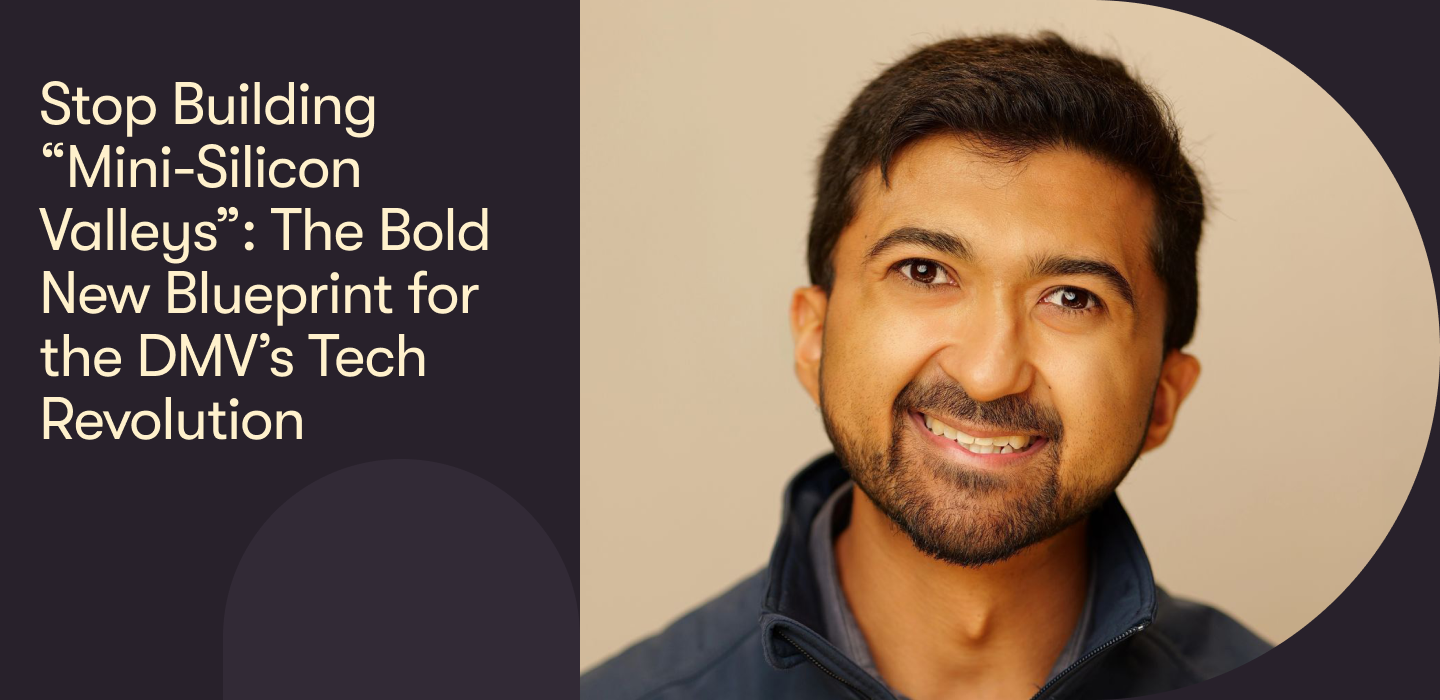
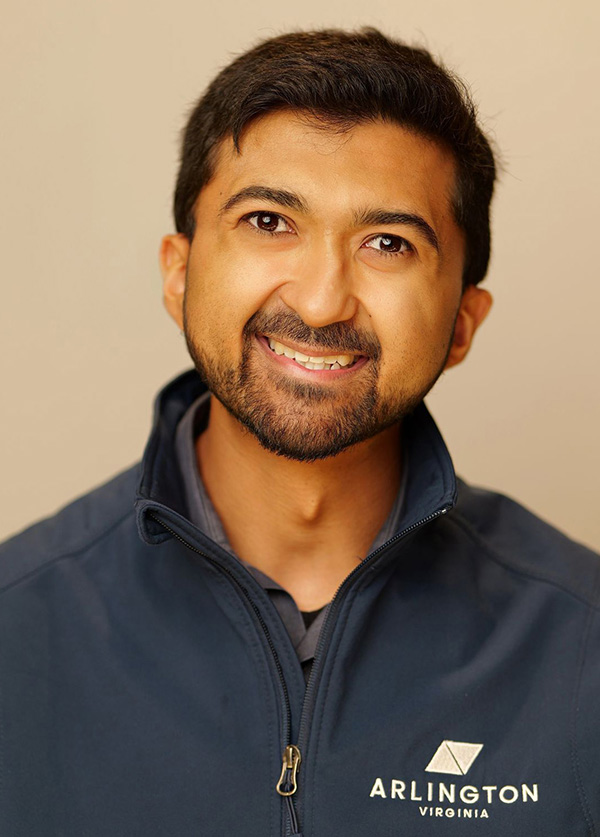
Sumeet Saini is currently a Senior Business Development Manager with Arlington Economic Development (AED). He has served with the County for nearly five years, with his work focusing on attracting and retaining venture-backed tech startups to Arlington and helping address gaps in the regional tech ecosystem. Sumeet has helped create and administer Arlington’s flagship Catalyst Grant Program, one half of the multiyear Arlington Innovation Fund (AIF) ecosystem building initiative.
Late last year Sumeet began a Venture Fellowship, separate from AED, with E2MC Ventures. Previous to AED, Sumeet worked in Business Intelligence with a Richmond-based tech startup and previously worked in community development.