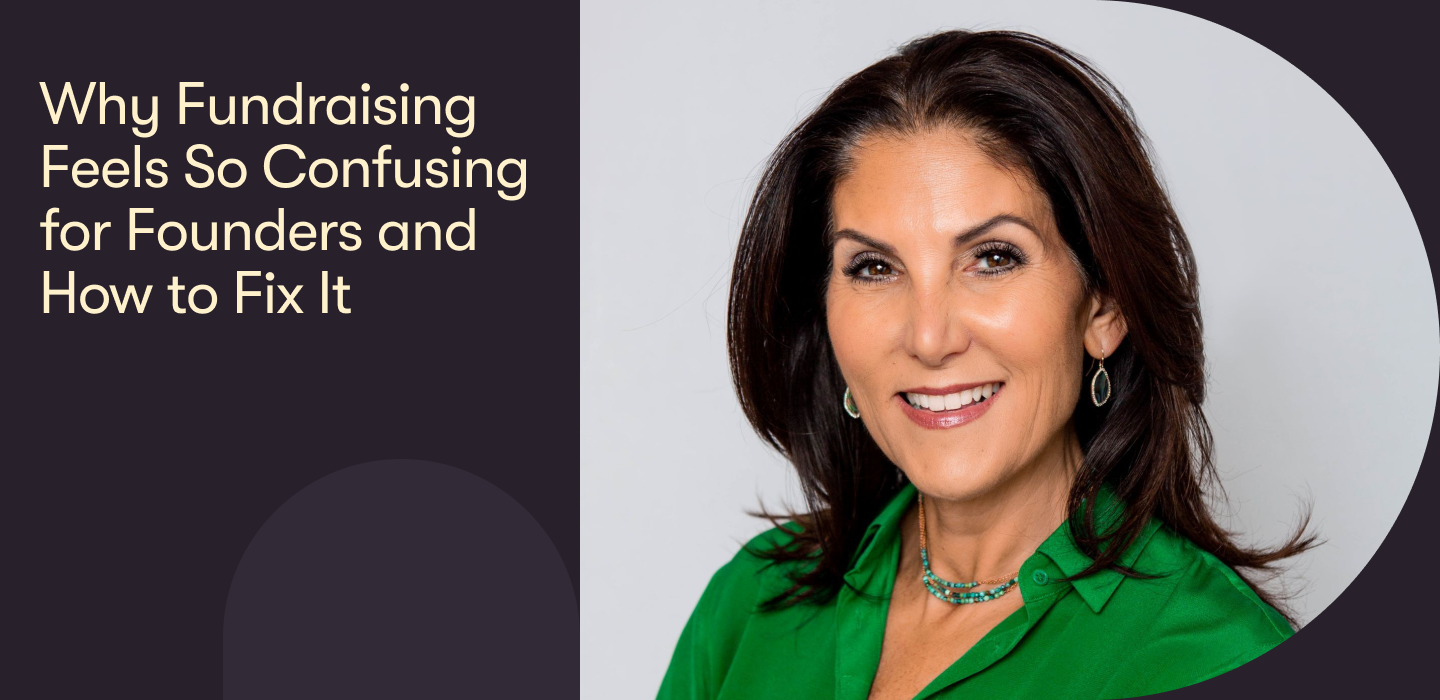
Why Fundraising Feels So Confusing for Founders and How to Fix It
In this piece, Lisa Friedlander breaks down the "translation gap" between operational speak and investor language. Learn how to stop pitching and start signaling, why structural readiness matters early on, and how to master the art of framing your startup’s future to secure the capital you need.
Great companies struggle to raise capital not because the opportunity isn’t real, but because the signal investors are looking for is getting lost in translation. Founders understand their businesses deeply. They know the problem they’re solving, the customers they’re serving, and the daily grind of building something from nothing.
But when they sit across from investors, they suddenly have to communicate that reality in a completely different language, one built around risk assessment, portfolio dynamics, and capital allocation.
And no one really teaches founders that language.
Over the past several years, I’ve had a front-row seat to this challenge. Through my work as an exited founder, helping build and grow NEXT powered by Shulman Rogers, and co-founding My NEXT Raise, I’ve spent thousands of hours with early-stage teams preparing for fundraising, structuring their companies, and navigating investor conversations.
Foundervine recently commissioned research that surfaced an insight I’ve also observed over the years: the gap between founders and investors is rarely about the quality of the company. It’s about translation.
The Fundraising Reality Most Founders Don’t Expect
When founders begin fundraising, many assume the process is primarily about pitching. But pitching is actually just one part of the equation.
Most investor decisions are made based on pattern recognition. Investors are scanning for signals they’ve seen before indicators that a company has the potential to generate returns.
Those signals often fall into a few categories:
• Evidence of market demand
• Speed of execution
• Team capability
• Capital efficiency
• Governance and structural readiness
• Clear milestones that unlock the next stage of growth
The challenge is that founders are often communicating their progress in operational language rather than investor language. For example:
A founder might say: “We’ve been talking to a lot of potential customers.”
An investor hears: “Customer validation is still unclear.”
Or a founder might say: “We’re experimenting with pricing.”
An investor hears: “The revenue model may not be proven yet.”
Neither side is wrong. They’re simply speaking different dialects of the same story. This is the translation gap.
Why the Gap Exists
Most founders learn fundraising in real time.
Unlike product development, engineering, or marketing, there’s rarely a structured curriculum for understanding how capital markets work.
So founders pick it up through:
1. Conversations with other founders
2. Trial and error with investors
3. Occasional accelerator programs
4. Online content and podcasts
That patchwork approach works eventually, but it often comes with a lot of unnecessary friction. By the time many founders truly understand how investors evaluate companies, they’ve already had dozens of investor conversations that could have gone differently with better preparation.
That’s one reason why organizations like Foundervine and other leaders in the startup ecosystem are so important; they help surface patterns and make the fundraising process more transparent for founders earlier in their journeys. But there are also practical things founders can do today to close the gap.
What Investors Are Really Evaluating
One of the most helpful mindset shifts founders can make is understanding that investors are not simply evaluating the current state of your company. They’re evaluating how predictable your future progress looks from today.
Early-stage investing is essentially an exercise in structured uncertainty. Investors know your plan will change. They know your projections won’t be perfect. They know your product will evolve. They are buying risk when they invest in your company.
What they’re trying to understand is:
• Are you moving fast enough to find the right answers?
• Are you learning from the market quickly?
• Is the team capable of adapting under pressure?
• Is the company structured in a way that won’t create problems later?
When founders frame their progress around these questions, investor conversations become much more productive.
The Importance of Legal and Structural Readiness
One of the more surprising lessons founders learn during fundraising is that legal structure and governance often matter earlier than expected. Through our work at NEXT, we regularly see companies that have strong traction but run into diligence issues because of early decisions around things like:
• Cap table structure
• Founder equity agreements
• Option pools
• SAFE or convertible note terms
• Corporate governance
These issues are rarely fatal, but they can slow down deals or create unnecessary complexity during diligence. Investors want to know that the company is built on a solid foundation not just technologically, but structurally. Founders who address these things early often find that fundraising conversations move more smoothly.
Why Access to Honest Feedback Matters
Another recurring theme founders share with me is that the hardest part of fundraising isn’t rejection. It’s uncertainty. Founders are resilient. Most expect that many investors will say no. What they want is clarity around why. Unfortunately, investors often don’t provide detailed feedback, not because they’re unwilling, but because time constraints make it difficult.
This is where founder communities and structured feedback environments become incredibly valuable. Some of the most productive fundraising preparation I’ve seen comes from environments where founders can:
• Test their narrative
• Simulate investor conversations
• Receive candid feedback
• Refine their messaging before high-stakes meetings
That’s why platforms and communities designed around investor readiness can make such a difference.
The Power of Proximity to Investors
Another lesson I’ve seen repeatedly is that founders who regularly interact with investors outside of formal fundraising tend to learn much faster.
When founders have opportunities to:
• Ask investors how they evaluate companies
• Observe how investors ask questions
• Hear feedback from multiple perspectives
The translation layer begins to develop naturally. This is one of the reasons we built My NEXT Raise to include things like investor office hours and structured opportunities for founders to engage with experienced investors before they’re in the middle of a fundraising process.
Those conversations are often where the most valuable insights happen. Not because founders are pitching but because they’re learning how investors think.
Fundraising Is Not the Only Path to Success
One of the most encouraging shifts I’ve seen in the founder community recently is a broader definition of success. Many founders are becoming more thoughtful about when and whether to raise venture capital. Venture funding can be a powerful growth tool, but it isn’t the right fit for every company or every stage.
Some of the strongest companies we work with focus first on:
• Revenue traction
• Strategic partnerships
• Product-market fit
• Operational discipline
When those fundamentals are strong, fundraising often becomes easier and sometimes less necessary. Capital should accelerate a healthy business, not compensate for a fragile one.
Practical Advice for Founders Preparing to Raise
If you’re preparing to raise capital in the next 12–24 months, here are a few things I recommend focusing on early:
1. Learn how investors evaluate risk Understanding venture economics and portfolio dynamics will dramatically improve your fundraising conversations.
2. Translate traction into clear signals Customer growth, retention, revenue expansion, and product engagement are all signals investors understand.
3. Build relationships before you need capital Investor relationships built outside of fundraising cycles tend to be stronger and more productive.
4. Get candid feedback early Testing your narrative with experienced founders, investors, or advisors can save months of effort later.
5. Make sure your company’s foundation is solid Cap tables, governance, and legal structure should support not complicate future investment.
The Bigger Opportunity for the Startup Ecosystem
The more founders I work with, the more convinced I am that the startup ecosystem doesn’t need more noise. It needs more clarity.
• Clearer expectations. • Clearer feedback. • Clearer pathways between building a company and raising capital.
Organizations supporting and listening to founders, and ecosystem development help make those pathways more transparent. And founder communities that encourage honest conversations, shared learning, and long-term relationships can dramatically shorten the fundraising learning curve.
Fundraising will probably always feel a little uncertain. That’s part of the nature of startups. But it doesn’t have to feel opaque. When founders understand how investors evaluate companies and when ecosystems create environments where that knowledge is shared openly the entire process becomes more efficient.
Founders spend less time guessing. Investors engage with stronger, more prepared companies. And the focus can return to what matters most: building enduring businesses that lay the foundation for how industries will evolve in the years ahead.
About the Author
Lisa Friedlander is Chief Revenue Officer at NEXT powered by Shulman Rogers and Co-Founder of My NEXT Raise, where she operates at the intersection of startups, capital, and innovation. Through her work with hundreds of founders and investors, Lisa has developed a front-row view into what truly drives successful fundraising and where companies most often fall short.
At NEXT, she helps shape how legal services support early-stage startups, delivering practical, business-minded guidance built for their pace. Through My NEXT Raise, she focuses on closing the gap between founders and investors by equipping startups with the tools, structure, and insights needed to navigate diligence and raise capital with confidence. If you’re preparing to raise, explore My NEXT Raise for founder-focused tools and a Premium AI Data Room, and see how NEXT’s founder-friendly model delivers top-tier legal expertise aligned with the speed and budget of how startups actually operate.